What Silicon Valley should learn from Windows Phone 7 app developers (First looks at Zagat and Loopt’s apps!)

So, if you haven’t heard about Microsoft’s Windows Phone 7 yet, you are either living under a rock or Amish or something like that. Microsoft is spending a billion in advertising the new system. Will it be successful? Well, I’ve been visiting app developers to figure that out.

Early results? Yes, it will be successful. Why? A few reasons:

1. It’s a sexy new OS that gives app developers more capabilities. You’ll see that in the Loopt video when CEO Sam Altman brags that his app is able to display info right on the home screen.
2. Developing for it is easy and consistent across the devices that it runs on, unlike Android, which requires testing and specialized development for each different handset.
3. There are a ton of bored developers who are familiar with .NET and Visual Studio who are chomping at the bit.
4. Almost every developer I’ve met lately has been approached by Microsoft’s evangelists (I used to be one so am familiar with the tactic) and have been offered everything from money, to discounts on other Microsoft products, to developer time to port apps. Microsoft knows that if its system has no apps no one will buy its phones, even if most customers use very few apps (the belief that they are missing out on a more capable ecosystem, they know, will keep them from buying).
5. The hooks with Microsoft Xbox have developers intrigued. Why? Well, just sign into Xbox Live and see how many people are online right now. I’ve been playing with Microsoft Kinect for the past few days and, damn, a lot of my friends are into Xbox. Gaming drives a lot of revenue on phones. Just talk to the folks who developed Angry Birds.

So, what can Silicon Valley’s mobile companies (Apple, Google, and others) learn from these developers?

First, watch the videos with Zagat’s head of mobile, Ryan Charles, showing off its Windows Phone 7 app:

And also take a look at Loopt’s Windows Phone 7 app, as shown by Loopt’s CEO, Sam Altman:

1. Phones now are going to be judged on what info will get displayed on the home screen. That makes Apple’s iPhone look lacking. Apple’s screen just shows you a count of things that are waiting for you. For instance, Whrrl on my home screen is showing “8.” That means that eight messages or friend requests are waiting for me. But that’s pretty lame compared to Windows Phone 7, which shows a lot more detail.
2. Apps are going to need to be photographic in tone. Look at the new Zagat app’s home screen and how beautiful it is. Makes Zagat’s app on iPhone and Android look pretty lame and Nokia and RIM? Not even in the ballgame.
3. Apps are going to need to have better cross-app links. Look at Zagat. It displays info from Foursquare users (tips) and Foodspotting users (photos of meals). Take that further, Apple is starting to look dated because its apps don’t allow interoperation. Wait until Tuesday and you’ll see another example on Android of how a system can do better integration than is allowed on iPhones.
4. Microsoft’s Xbox Live is showing signs of becoming a full-blown social network that could make Google very jealous. How? Well, I stood in front of my Kinect tonight and it recognized it was me, not my wife. Also, we’re using Xbox to watch movies, download music, video conference with friends (very cool feature of the new Kinect, by the way), and do other things. Facebook, Google, and Apple better watch for those things to come to Windows Phone 7.
5. The real money is in enterprises. While Apple had to convince us one-by-one to stand in line to get our iPhones, Microsoft knows that it can convince entire companies to switch, which will bring tens of thousands, or sometimes even hundreds of thousands of users in one swoop. Heck, I work for Rackspace and we have 3,000 users. If Rackspace decided on one phone system over another, I’d have to use it even if I didn’t like the choice (luckily Rackspace hasn’t been like most enterprises so far). I’ve already started seeing chatter of entire companies going one way or another. Microsoft has some big sticks to convince CTOs to go with Windows Mobile “would you like a deal on Exchange, Sharepoint, SQL Server, and Office?” Google and Apple don’t yet have a consistent answer to the Microsoft salesforce.
6. Google and Apple have to treat developers better to ensure innovative developers support them only. Microsoft +is+ winning over developers due to easier-to-use-and-more-powerful development tools and love and feeding due to 1,100 evangelists working the globe. Does Apple have 1,100 evangelists? No way. Neither does Google. So both have to find ways to make developers more loyal. In Apple’s case there’s industry-leading revenues. In Google’s case? Number of handsets. Will those arguments work in 2011 though? Microsoft is coming on strong.
7. But to me it comes down to the visual aesthetic. You have to see the new Zagat app. Can Apple or Google match this look and feel? Not yet, and that’s something they should look to beat.

How is Apple fighting back?

Well, Kik just found out how good being featured in Apple’s iTunes store is. They got more than a million users in just a few weeks. Heck, a less interesting app, FastMall, got 250,000 users the same way. Would they be able to get that many on Google or Microsoft? No way.

Also, Sephora.com tells me that most of its store’s mobile users are using Apple devices. Same thing with eBay’s CTO. OpenTable’s Mobile Team. All tell me that Apple has the most lucrative customers. Can Google or Microsoft get in on that action? Well, Zagat and Loopt aren’t leaving that to chance and have built great apps for Windows Phone 7. Other developers? They tell me they are waiting to see how Windows Phone 7 sells before dedicating precious developer time to that platform.

Listen to Zagat’s Ryan Charles and he says he is getting a lot more feedback from Apple’s users, which helps him develop better apps.

One other huge negative to Windows Phone 7 that I’ve heard from every developer: the Web browser is sub standard. Way behind Android and iPhone. I sure hope Microsoft fixes that soon, because a whole other range of developers are betting on HTML 5 to get into mobile. There’s a whole range of companies who don’t have enough developers, like Loopt and Zagat do, who want to build really great web-based apps, but who are looking at the browser in Windows Phone 7 and finding it really is crappy. That’ll hold back excitement of Windows Phone 7 for a while.

How about you? Are you excited about Microsoft’s Windows Phone 7? Are you building an app for that platform? Leave a comment here.
Does RockMelt (a new social browser coming tomorrow) have the right startup philosophy?

CEO Eric Vishria and CTO Tim Howes of RockMelt invited me over on Friday to see a new browser. Who is behind this? Marc Andreessen. The guy who started Netscape. He, and a bunch of other interesting people are investors in this company.

In this video you’ll see what makes this browser different. Or, you can see the other people who’ve seen it and are writing about it on Techmeme. You can sign up for access to the beta at RockMelt.com.

After all that, I’m left with the question: does this startup have the right philosophy?

Why am I wondering that?

1. I’m a power user. I have iPads. iPhones. Android phones. Windows Phone 7 phones. Plus Windows 7 and Macintosh-based desktop and laptop computers. Oh, and an Xbox and a Playstation and a Roku box, among other widgets and gadgets. My browsing experience spans nearly all of these, so someone who only has an answer for Windows and Macintosh is not likely to make its way into my life.
2. It requires a download. I’ve interviewed tons of “normal” users lately as I fly around the world. Most people are download adverse. Even iPhone and iPad users are not trying a whole lot of new things. Of the geeky early-adopter audiences I’ve spoken to, only about 5% have loaded more than 100 apps on those platforms. Users on old-style systems are far less likely to try new things.
3. It requires a login. Folks are not used to logging into their browser. That’s a major change to ask people to do to get new features.
4. It changes search behavior. I use Google Chrome BECAUSE it only has one box: the one where you enter your searches as well as your URLs. I think that’s elegant and nice. RockMelt asks you to use two separate boxes again, which clutters UI, but worse yet, asks you to change your expectations of how search should work (yes, it’s better, but change is hard for normal users — they probably will wonder why search isn’t just pulling up full Google).
5. The Twitter client isn’t full featured. It doesn’t support real time, for instance, like Seesmic and Tweetdeck do. So, advanced users like me won’t find it good enough.

That is a LOT of change to ask people to do and it’s a lot to ask early adopters to overlook. Here’s why that matters:

Late adopters usually change their behavior only after getting hounded by early adopters. I’ve seen this over and over. Many marketers think they can work around the early adopters and usually that turns out to be a bad strategy. Can you think of an example of when a new product ignored the early, or advanced, adopters/users, and got major adoption at the mass market without them? I can’t and I’ve been studying this for a long time.

Already I’m watching reactions on Twitter and most of the advanced user types are wondering whether this is like Flock (another social browser most of them have ignored) and some, like Rafat Ali, say that this is the worst of Silicon Valley bubbleisms.

Why is there such a negative reaction?

Change is hard, but there’s something else: advanced users have a framework of WHERE they’ll accept change. I call it “battlefronts.” Places where the industry is actively fighting it out. Right now I expect a LOT of change on mobile apps, for instance, but not much change on my desktop or laptop computers or operating systems. Browser wars? So 1996. But 2010? We’re in a mobile phone war, for gosh’ sake. Too much change in wrong place and it gets a blowback.

Tonight I’ll have several videos, for instance, from companies who are doing apps for Windows Phone 7. Those will be very well received, I expect, compared to RockMelt.

So, why do I care about RockMelt? Because social continues to radically change everything about my life. Look at Foodspotting, Foursquare, Tungle.me, and/or Plancast. Those are radical changes to how I live my life. I want a browser that integrates those into my Facebook and Twitter experience. So far that hasn’t arrived. Will RockMelt bring it to us in the future? Possibly, but today they haven’t and have aimed at slower adopters.

I think that’s a strategic mistake. How about you? In the interview RockMelt covers why they made the bets they did at 19m 40 seconds into the video. “There are 2.1 billion people who use browsers…that’s a lot of people.” Listen to their answer.

Is it the right philosophy for a startup to have?

Great interview: candid, disruptive Mark Zuckerberg

Mark Zuckerberg interviewed by Financial Times, Scobleizer, and Techcrunch

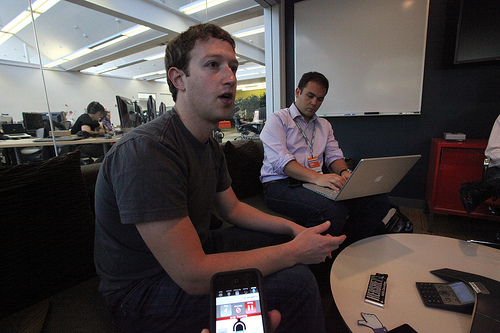
While at Facebook a group of us got called aside for a private interview with Mark Zuckerberg. In the interview was MG Siegler and Jason Kincaid of Techcrunch and David Gelles of the Financial Times. From Facebook was Erick Tseng, head of mobile.

You can listen to this interview on my Cinchcast, thanks to the other journalists for letting me record that.

We covered a wide variety of topics and Zuckerberg answered them in a candid and open way that you rarely see him do.

More later tonight as I digest what he said, just wanted to get this up since it’s a very interesting look into the mind of the guy who is disrupting industries and major tech companies.

Google is lost in location-based battle with Facebook, will it checkin?

Mark Zuckerberg introduces new mobile platform

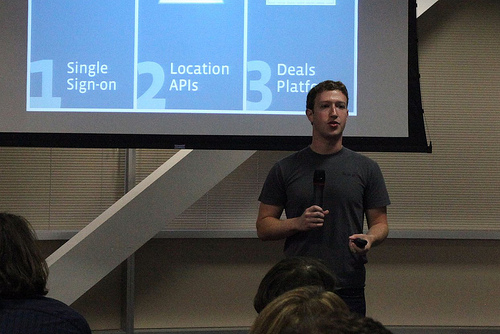
Today Mark Zuckerberg announced a bunch of stuff. Go read Techmeme to hear about Single Signon, and its new deal platforms. Those are interesting because they increase the lockin that Facebook will have over its users. Why? Well now you’ll always keep your phone signed into Facebook and you’ll be able to instantly sign into new services that use Facebook’s single signin. That alone is pretty big, but I’m a user and focused on location-based services.

But don’t miss the huge shift going on.

In the past, to find a business, we’d go to Google and type something like “Palo Alto Sushi.”

We’re heading toward a world where you’ll use location-based services to do the same thing. That is a HUGE disruptive threat to Google.

Here’s why.

In Google’s world they controlled everything and were able to decide which ads get displayed next to searches for businesses.

The world has now shifted to where people like my wife stay signed into Facebook 18 hours a day. Now she can see which businesses her friends are using.

Soon, we’ll have the ability to even get deals. For instance, the North Face is giving us $1 to check in at a National Park or at one of its stores.

Look at how folks find their way into my brother’s bar in Virginia, too. What will get people into a bar? A Google style ad, or an ad that says “five of your friends are at the bar right now?” Hint: Google-style ads don’t work for lots of businesses and social and location-based ads are far more effective.

Today Facebook laid down an entire platform for doing this, which will enable new mobile apps to have these features built in. Google is lost in such a world.

That should scare the hell out of them. What’s Google’s answer?

Why Mark Zuckerberg would be an idiot to announce a hardware device today

You’ve seen other people’s predictions about what’s coming from Facebook today. At 10:30 a.m. Pacific Time Facebook will be announcing something mobile. You can watch along live.

In an interview with HighFiveLabs’ team, a new popular mobile app developer, CEO Kiran Bellubbi told me he thinks Facebook is coming out with a new “Facebook phone.” I told him that would be idiotic. With one caveat, that I’ll cover later.

Some things to cover before we get to the heart of the matter:

1. Facebook hates Google (and Google hates Facebook — I’ve heard that at Google you are not allowed to build any Facebook features into Google products and over at Facebook Zuckerberg snuffed Google and made an exclusive deal with Microsoft’s Bing to add social features to that search engine).
2. Facebook is so powerful that mobile companies are forced to build their own Facebook apps, after all, who would buy a phone that doesn’t have Facebook today? Not many people. RIM’s Facebook apps? Built by RIM, not by Facebook. Microsoft’s? Built by Microsoft, not by Facebook. Nokia’s? Built by Nokia, not by Facebook.
3. Facebook’s development team is still pretty small. Only a few hundred engineers. They need to focus on ways to get them to a billion users.

Let’s say Facebook did its own phone. What would that cause? Well, for one, it might piss off some of the mobile phone companies that aren’t already pissed at Facebook. That would push more of them to make deals with Google to help reduce Facebook’s influence in this industry. That’s one hit.

But what OS would such a device have? Android? No way. Zuckerberg isn’t going to get in bed with Google. So, what else is left to choose from? Nothing. Nada. There’s no other good web-centric platform to build a really great device on. Well, there’s Apple, but is Apple willing to give up control? Hell no. How about Microsoft? No units out there, no apps. Zuckerberg isn’t about to randomize his development team on such a project. Hit two.

Let’s look at the users. My wife is about as addicted to Facebook as anyone on the planet. Would she move from iPhone to something else just to get a cooler Facebook experience? No. Why not? Her other addiction is Angry Birds. Plus, she’s locked in by AT&T anyway. Most users are like this (look at how popular RIM and Nokia remain around the world, even while there are much better mobile systems out there, for instance). Facebook can’t take on the risk that a new mobile device would represent. If they fail at it (and even Google’s Nexus One experiment failed) then they’d kill any chances of going public soon.

So, what will Facebook do instead?

Long odds? A major deal with Apple.
Better odds? A new cross-device platform that will let new mobile developers ship Facebook apps to mobile phone users without going through the Apple and Google stores.
Best odds? New iPhone and iPad apps with new mobile/social/location APIs so that developers can build new mobile apps with social features included in them.

Me? I’m hoping that Mark Zuckerberg, in about an hour, will introduce Steve Jobs and show off a major new development effort that will keep Facebook and Apple strongly aligned for a decade.

What are you hoping for?

Inside the heads of the developers the mobile companies (Apple, Amazon, HP, Nokia, Microsoft, Google, RIM) are fighting over

Today Facebook will announce something new for mobile phones. Business Insider gives its guesses as to what’s coming.

At 10:30 a.m. today, Pacific Time, you can watch the Facebook press event live streaming on the Web. I’ll be there as well and will get a chance to interview Mark Zuckerberg after the event.

To prepare for the event I wanted to get inside the heads of a successful mobile app development team. HighFiveLabs is it. They’ve published more than 10 mobile apps on the iPhone platform and just shipped a new app that got the coveted “featured” position on Apple’s iTunes store. What does that mean? Their new “Mario Batali Cooks” app sold about 15,000 copies at $4.99 each. Not too bad for a startup with five employees.

But there’s something bigger going on. They are a representative of a whole new industry that’s popped up in the past few years — mobile publishing houses. These folks are being courted heavily by the big phone companies. Microsoft, in particular, with its Windows Phone 7 is pushing companies like these to port its apps over. Next week I’ll have a sneak preview of Zagat’s new app, for instance, that is quite nice.

Almost every developer I’ve visited lately says they’ve had a visit from either Nokia or Microsoft or RIM or all three. Why are apps so important to these companies? Well, lets say you are a fan of chef Mario Batali (he has lots) will you buy a new cell phone that doesn’t have his app on it? No way. Repeat that question over the thousands of apps that exist on Google’s Android or Apple’s iPhone and you can see why their sales are growing while those of RIM or Nokia or Microsoft’s platforms are stagnant at best.

But that’s only one way to look at this interesting team. In this 48 minute interview with HighFiveLabs’ team, CEO Kiran Bellubbi, along with its head geek and designer we cover a bunch of other topics.

1. What makes for a great mobile app. Their apps have a rich aesthetic that get them onto Apple’s featured list. How do they do it?
2. How they see themselves as a publisher, similar to a book publisher, but how their world is different. Multimedia and interaction design being the biggest ones.
3. Their predictions for what’s coming from Facebook today (He thinks they will come out with a hardware device). What they are hoping for, and how their team might be randomized by those announcements (they are looking for ways to add more social interactions into their apps, for instance).
4. How they built their team for productivity and some of the programming hacks they built to get updates out in minutes, rather than days.
5. Why iteration is so important for mobile app developers.
6. Angst about how they’ll make money on non-Apple platforms (they are porting to Android, but other developers that they listen to tell them that Android users don’t buy apps at the same rate that Apple’s do).
7. Talk about the slate market. They’ve been courted by Amazon, for instance, who want them to build apps for a slate that Amazon is working on.

Anyway, this conversation is long, but there’s lots of interesting insights into how mobile developers think and how they make their development decisions.